
Is It Perimenopause, Stress or Burnout? Why Women’s Hormone Symptoms Need More Nuance
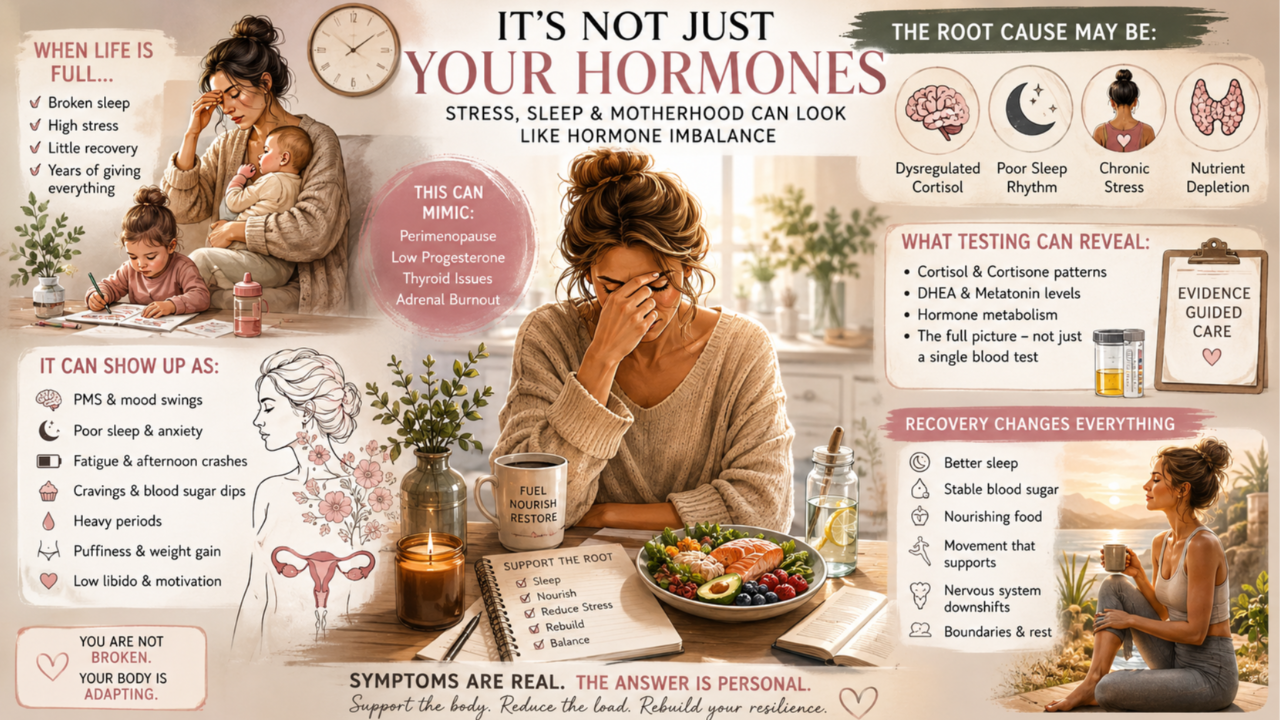
Many women reach their late 30s or early 40s and suddenly feel like their body has changed. Their periods become heavier or more symptomatic. PMS increases. Sleep becomes lighter. They feel more anxious, more reactive, more tired, more puffy and less resilient.
Understandably, the first thought is often: “Am I in perimenopause?”
And sometimes the answer is yes.
But clinically, the better question is not always “is this perimenopause?” The better question is: what is driving the pattern?
Hormone symptoms are not always caused by the hormones you think
Symptoms like PMS, breast tenderness, carbohydrate cravings, poor sleep, mood changes, shortened luteal phases and heavier bleeding can point toward progesterone changes.
But they can also occur when the body is under prolonged physiological stress.
This is especially relevant for women who have spent years parenting young children, breastfeeding, working, training, studying, running households, sleeping lightly and living with very little genuine recovery.
The body does not separate these inputs.
Your reproductive hormones are influenced by sleep, stress chemistry, thyroid function, inflammation, nutrient status, energy availability, blood sugar regulation and nervous system state.
So when symptoms appear, we need to zoom out.
Stress does not always mean high cortisol
A common online message is that stress equals high cortisol. This is too simplistic.
Cortisol is a normal and essential hormone. It helps regulate energy, blood pressure, immune function, inflammation, blood sugar and our morning wake response.
In acute stress, cortisol may rise. But with long-term load, poor sleep and chronic under-recovery, the pattern can become more dysregulated. Some women present less like “high cortisol” and more like a flattened, depleted or poorly timed cortisol rhythm.
This can feel like:
Afternoon exhaustion
Low motivation
Anxiety or internal buzzing
Poor sleep
Low libido
Dizziness or feeling faint
Poor stress tolerance
Joint aches
Histamine-type symptoms
Thyroid-like symptoms
Cravings and blood sugar dips
Puffiness and abdominal weight gain
This is why symptom interpretation needs clinical nuance.
Motherhood can look like endocrine dysfunction
Motherhood can be beautiful and meaningful, but it can also be physiologically demanding.
Pregnancy, birth, breastfeeding, broken sleep, mental load, emotional vigilance and reduced self-care can all create a real biochemical load.
A mother may not have had a full night of sleep in years. She may be feeding everyone else before herself. She may be training or working through exhaustion. She may be trying to “get her body back” while her body is still trying to recover.
This is not just a mindset issue.
It can affect cortisol, melatonin, thyroid signalling, appetite regulation, insulin sensitivity, immune function and reproductive hormone patterns.
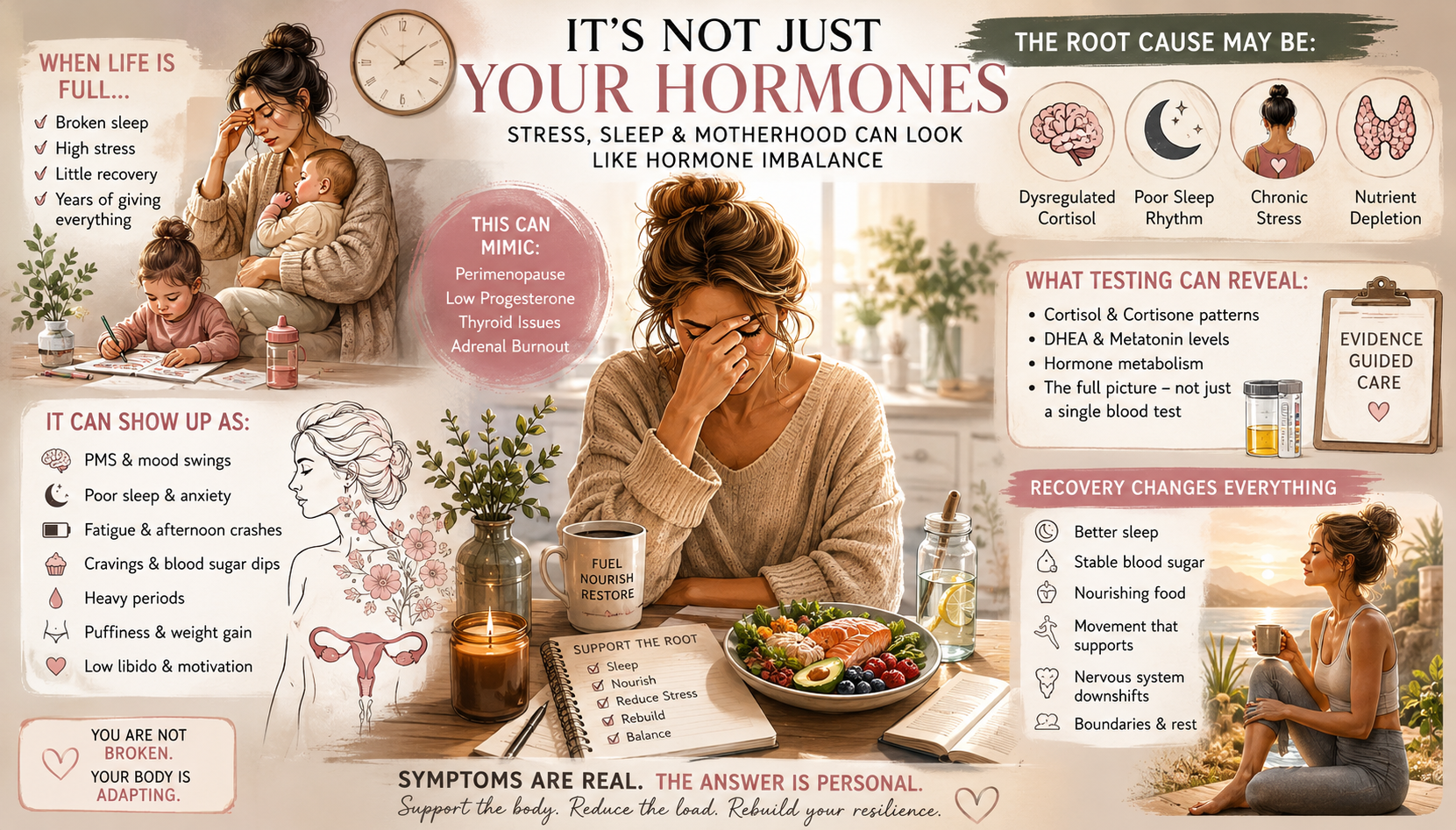
Why blood tests may not tell the whole story
Blood tests are incredibly useful, especially for thyroid markers, iron status, inflammatory markers, blood glucose, lipids, reproductive hormones and nutrient status.
But not every hormone question is answered by one blood test.
Cortisol is a good example. A single serum cortisol result may help identify more extreme medical patterns, but it does not show the full daily rhythm, free cortisol patterns or cortisol metabolism.
This is where functional testing can sometimes provide more clinical direction, especially when symptoms are complex and the treatment pathway is unclear.
The point is not to test everything.
The point is to test when the result will change what you do.
Why progesterone is not always the answer
If a woman has PMS, poor sleep, breast symptoms, cravings and a shorter luteal phase, progesterone may absolutely be part of the conversation.
But it is not always the first or only answer.
Progesterone production depends on ovulation quality, and ovulation quality is influenced by stress load, energy availability, thyroid function, inflammation, nutrient status and sleep.
So if a woman is under-recovered, under-fuelled and running on broken sleep, her progesterone symptoms may be downstream of a bigger stress physiology pattern.
Supporting progesterone without addressing the system it sits inside may only get partial results.
The clinical question women deserve
Instead of asking: “What hormone is low?”
We need to ask:
What season of life is she in?
How long has she been sleep deprived?
Is she eating enough?
Is she recovering from training?
Is she still breastfeeding or recently postpartum?
What is her thyroid doing?
What is her iron status?
What does her cycle history show?
Is her nervous system constantly vigilant?
Is blood sugar stable?
Is inflammation or histamine part of the picture?
Is this perimenopause, stress, burnout or a combination?
That is where good care becomes more personalised.
Practical ways to support this pattern
For many women, the starting point is not extreme intervention. It is rebuilding capacity.
That may include:
Prioritising consistent meals with enough protein
Stabilising blood sugar across the day
Reducing excessive caffeine reliance
Creating a realistic sleep support plan
Adjusting training load to match recovery
Supporting minerals and hydration
Assessing thyroid, iron, B12, vitamin D and inflammation
Addressing gut symptoms and histamine patterns
Using targeted functional testing where appropriate
Creating boundaries around output and recovery
The goal is not to tell women to do less with their lives.
The goal is to help their physiology sustain the life they are trying to live.
Hormone symptoms are real, and perimenopause is real, and progesterone changes are real.....But so is chronic stress physiology.
When a woman has been carrying a high load for years, her body may express that through her cycle, sleep, mood, metabolism and energy.
That does not mean it is “all stress”.
It means the body is connected.
And the best treatment plan is the one that understands the pattern before trying to fix the symptom.
For hands on integrative coaching and personalised care - https://www.inherhealthclinic.com/memberships
