AMH, Fertility and the Bigger Picture: What Every Woman Should Know About Her Ovarian Reserve
For many women, fertility feels like something that sits quietly in the background until one day it suddenly becomes important.
Whether you're planning a family now, considering children in the future, managing endometriosis, navigating PCOS, or simply wanting to understand your body better, one test that often comes up in conversation is AMH.
AMH, or Anti-Müllerian Hormone, has become one of the most widely used markers in reproductive medicine, yet it is also one of the most misunderstood.
Many women are told their AMH is "low" and immediately panic. Others are told their AMH is "high" and assume everything is fine. The reality is far more nuanced.
At InHer Health Clinic, we view AMH as one piece of a much larger puzzle.

What Is AMH?
AMH is a hormone produced by small developing follicles within the ovaries. These follicles contain immature eggs that may eventually progress through the stages of development required for ovulation.
Unlike many hormones, AMH remains relatively stable throughout the menstrual cycle, which makes it a useful marker for assessing ovarian reserve.
Ovarian reserve refers to the number of eggs remaining within the ovaries. Women are born with their lifetime supply of eggs, and this reserve naturally declines with age.
AMH gives us insight into quantity.
What it does not tell us is quality.
This distinction is incredibly important.
A woman may have a high AMH but still experience fertility challenges. Likewise, a woman with a lower AMH may still conceive naturally and have healthy pregnancies.
Why Knowing Your AMH Can Be Helpful
One of the most valuable aspects of AMH testing is that it allows women to better understand their reproductive timeline.
Many women today are delaying motherhood while they establish careers, travel, purchase homes, find the right partner, or simply wait until the timing feels right.
There is absolutely nothing wrong with that.
However, biology does not always align with modern life.
While some women maintain a healthy ovarian reserve well into their forties, others experience a much earlier decline. Without testing, there is often no way of knowing where an individual woman sits on that spectrum.
For women in their late twenties and thirties, AMH can provide useful information that may help guide future decisions around family planning, fertility preservation, or seeking support earlier rather than later.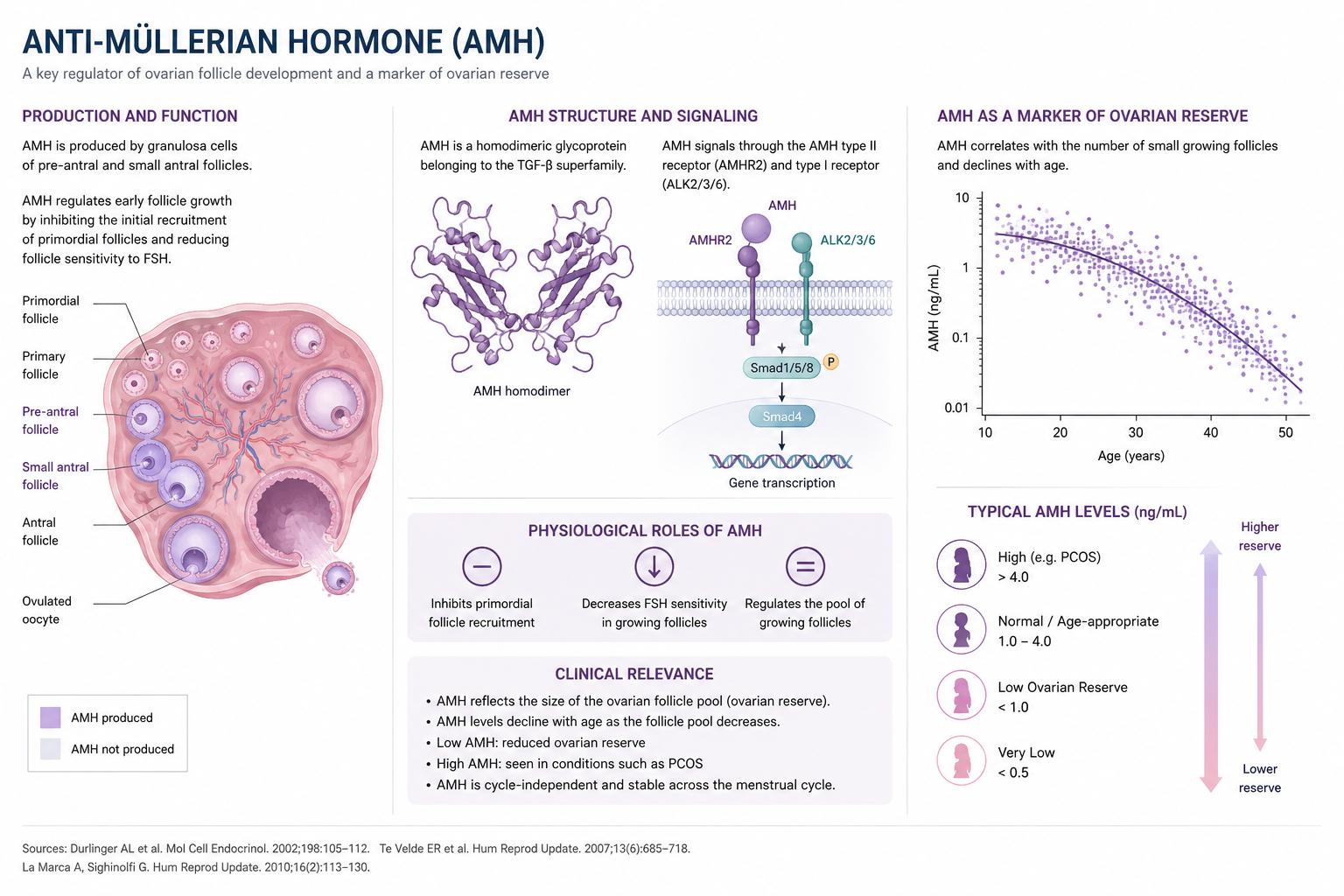
Low AMH Does Not Mean There Is Nothing You Can Do
One of the biggest misconceptions I see is the belief that a low AMH result means fertility is over.
That simply is not true.
When a woman presents with a lower AMH result, my first question is always:
Why?
We know there are many factors that may influence ovarian reserve and reproductive health.
These include:
• Endometriosis
• Previous ovarian surgery
• Autoimmune conditions
• Chronic inflammation
• Nutrient deficiencies
• Thyroid dysfunction
• Significant under-eating or low body weight
• Environmental exposures
• Certain medications
• Genetic predispositions
Rather than viewing AMH as a final diagnosis, we use it as a starting point for investigation.
A functional medicine approach asks deeper questions.
What is driving the picture?
What systems are under stress?
What can we optimise?
Endometriosis and Ovarian Reserve
One of the strongest themes discussed in the webinar was the relationship between endometriosis and ovarian reserve.
Women with endometriosis often face a complex situation.
The disease itself can negatively impact egg quality and fertility, but surgery can sometimes reduce ovarian reserve, particularly if endometriomas are present on the ovaries.
This is why specialist care matters.
The goal is always to minimise damage to healthy ovarian tissue while effectively treating disease.
For women with a history of endometriosis, annual monitoring of fertility markers may provide valuable information and help guide future reproductive planning.
PCOS and High AMH
At the opposite end of the spectrum are women with PCOS.
Women with PCOS frequently present with elevated AMH levels because they often have a larger number of small follicles sitting within the ovaries.
Many people assume this means fertility is perfect.
Not necessarily.
High AMH in PCOS often reflects an ovulation problem rather than a fertility advantage.
The focus becomes improving communication between the brain and ovaries, supporting metabolic health, reducing inflammation, and restoring regular ovulation.
When ovulation improves, fertility often follows.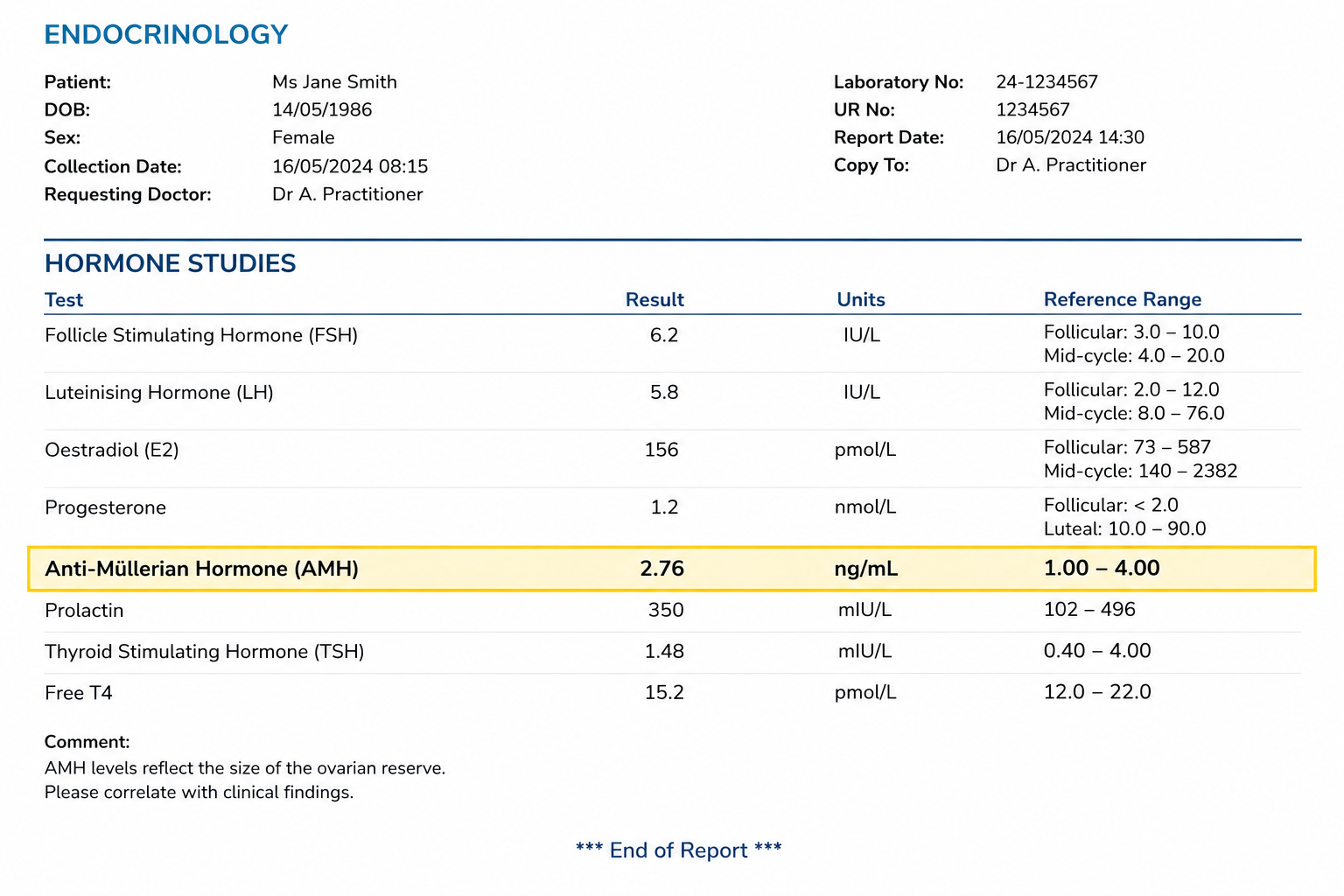
Fertility Is About More Than One Number
Perhaps the most important takeaway is this:
Your fertility cannot be reduced to a single blood test.
When we assess reproductive health in clinic, we are looking at the entire picture.
We consider:
• AMH
• Ovulation patterns
• Menstrual cycle health
• Thyroid function
• Iron status
• Nutrient levels
• Inflammation markers
• Gut health
• Hormone patterns
• Metabolic health
• Lifestyle factors
• Stress physiology
• Partner health
Every one of these pieces contributes to the fertility equation.
The Functional Medicine Perspective
At InHer Health Clinic, our goal is never to create fear around fertility.
Our goal is education.
Knowledge allows women to make informed decisions.
Sometimes that means investigating further.
Sometimes it means improving foundational health.
Sometimes it means considering fertility preservation.
And sometimes it simply means gaining reassurance that everything is tracking exactly as it should.
Your reproductive health is not determined by a single laboratory result.
It is influenced by your genetics, environment, nutrition, hormones, immune system, lifestyle, and life experiences.
The earlier we understand the story your body is telling, the more options we have available.
If you have questions about AMH, fertility, endometriosis, PCOS, or your reproductive health journey, our team can help you interpret the bigger picture and create a personalised plan that supports both your current health and future goals.
Want to learn more about this? Check out the fertility foundations course : a couples guide
CLICK HERE
